Understanding the framework of collective agreements in Suriname's unionised sectors is crucial for both employees and employers. This article will delve into which offices are responsible for handling these agreements, the processes involved, and what both parties should know to navigate this landscape effectively.
Overview of Collective Agreements
A collective agreement is a written contract between an employer and a group of employees, typically represented by a union. It outlines the terms of employment, including wages, working conditions, benefits, and other workplace policies. In Suriname, these agreements are vital for ensuring fair labor practices and protecting workers' rights.
In a unionised sector, collective agreements are negotiated by trade unions on behalf of their members. The process involves discussions and bargaining between union representatives and employers, aiming to reach a mutually beneficial agreement. The significance of these agreements cannot be overstated, as they provide a structured approach to resolving disputes and establishing workplace standards.
Key Offices Involved in Collective Agreements
In Suriname, several offices and institutions play a role in the management and enforcement of collective agreements. Understanding these entities is essential for both employees and employers.
1. Ministry of Labour, Technological Development and Environment
The Ministry of Labour, Technological Development and Environment (Ministerie van Arbeid, Technologische Ontwikkeling en Milieu) is the primary government body overseeing labor relations in Suriname. This ministry is responsible for ensuring compliance with labor laws and regulations, including those related to collective agreements.
Employers and unions must register their collective agreements with this ministry. This registration process is crucial as it formalises the agreement, making it legally binding. The ministry also provides guidance on labor laws and can mediate disputes that arise from collective agreements. For more information, you can visit the official website of the Ministry of Labour.
2. Trade Unions
Trade unions are the backbone of collective bargaining in Suriname. They represent the interests of workers in various sectors, negotiating collective agreements on their behalf. Each union operates within specific industries, such as education, healthcare, or construction, and has its own set of rules and regulations governing its operations.
Unions play a critical role in the negotiation process, advocating for better wages, working conditions, and benefits for their members. They also provide support and resources to employees, helping them understand their rights and responsibilities under the collective agreement. It is advisable for employees to actively participate in their union's activities to stay informed about ongoing negotiations and changes in labor laws.
3. The Suriname Trade Union Federation
The Suriname Trade Union Federation (Federatie van Vakverenigingen in Suriname) is an umbrella organization that encompasses various trade unions across the country. This federation coordinates collective bargaining efforts among its member unions and represents them in discussions with the government and employers.
The federation plays a vital role in advocating for labor rights at a national level, ensuring that the voices of workers are heard in policy-making processes. They also provide training and resources to unions, enhancing their capacity to negotiate effectively. For employees, being part of a union affiliated with the federation can increase their bargaining power and access to support.
The Process of Negotiating a Collective Agreement
Negotiating a collective agreement involves several steps, and understanding this process can help both employers and employees prepare effectively.
1. Preparation Phase
Before negotiations begin, both parties must prepare thoroughly. Employers should assess their current policies and practices, while unions should gather input from their members regarding their needs and priorities. This phase may involve surveys or meetings to identify key issues that need to be addressed in the agreement.
It is also essential for both parties to research industry standards and benchmarks to ensure that the proposed terms are competitive and fair. This preparation sets the stage for a constructive negotiation process.
2. Negotiation Meetings
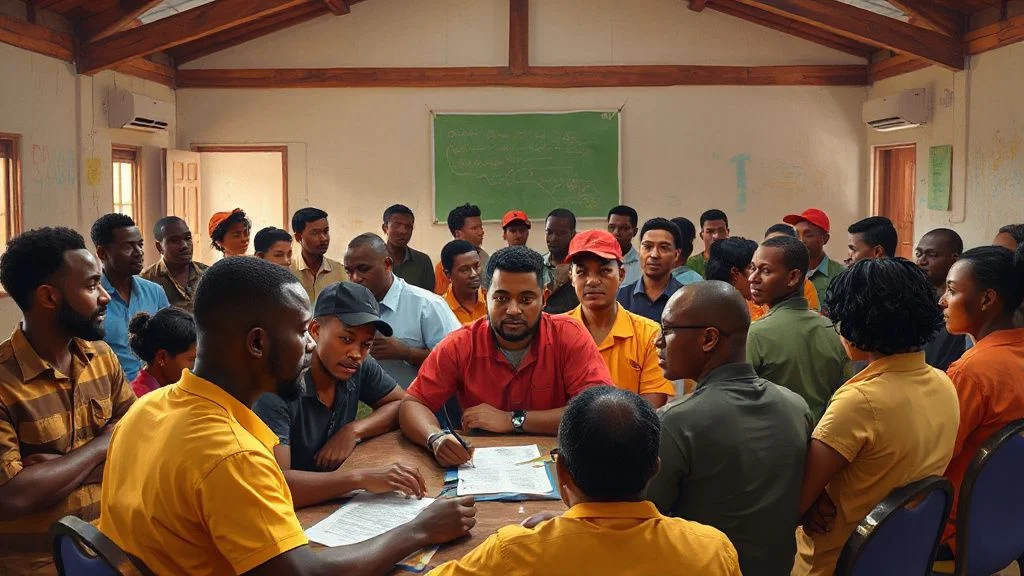
Once both parties are prepared, negotiation meetings are scheduled. These meetings can be formal or informal and may take place over several sessions. During these discussions, both sides present their proposals and counter-proposals, aiming to reach a consensus.
Effective communication is crucial during this phase. Both parties should aim to listen actively and understand each other's perspectives. It is common for negotiations to involve compromises, so flexibility is essential. If disagreements arise, mediation services from the Ministry of Labour can be sought to facilitate discussions.
3. Drafting the Agreement
Once an agreement is reached, it is drafted in writing. This document should clearly outline all terms and conditions agreed upon, including wages, working hours, benefits, and dispute resolution mechanisms. Both parties should review the draft carefully to ensure accuracy and completeness.
After finalising the draft, it is essential for both parties to sign the agreement. This formal signing marks the conclusion of the negotiation process and the beginning of the agreement's enforcement.
Legal Framework Governing Collective Agreements
The legal framework for collective agreements in Suriname is set by the Wet Collectieve Arbeidsovereenkomst and the Wet Vrijheid Vakvereniging, alongside the international conventions the country has ratified. Understanding which of them does what is vital for both employers and employees, and the paragraph below sets out the detail.
1. The Law on Collective Labour Agreements
Suriname has no consolidated labour code, so a text that cites one is citing something that does not exist. Collective agreements rest on the Wet Collectieve Arbeidsovereenkomst (G.B. 1962 no. 106, as amended by the law of 15 December 2016, S.B. 2016 no. 152), and the right to organise on the Wet Vrijheid Vakvereniging (S.B. 2016 no. 151). That law sets real and checkable rules: an agreement runs for at most three years including any extension, it binds employees who are not union members unless the parties agree otherwise, and a new agreement must be registered with the Ministry of Labour within fifteen days of signing. Recognition of a trade union, and the question of when an employer has to negotiate with one, are settled by the Wet Vrijheid Vakvereniging and the decree on the recognition of trade unions: the union needs legal personality, the power under its own statutes to conclude an agreement, and members among the staff of the undertaking. Where its representativeness is in doubt, the Bemiddelingsraad can put the question to the workforce in a referendum.
Employers must comply with the terms of the collective agreement once it is registered with the Ministry of Labour. Failure to adhere to these terms can result in legal consequences, including penalties or disputes that may require mediation or arbitration.
2. International Labour Organization (ILO) Conventions
Suriname is a member of the International Labour Organization (ILO) and has ratified several conventions related to labor rights. These conventions promote fair labor practices, including the right to organize and engage in collective bargaining. Employers and unions should be aware of these international standards as they can influence local labor laws and practices.
For instance, ILO Convention No. 87 on Freedom of Association and Protection of the Right to Organise ensures that workers have the right to form and join trade unions without interference. This convention reinforces the importance of collective agreements as a means of protecting workers' rights.
What Expats Should Know
For expatriates working in Suriname, understanding the local labor landscape is crucial, especially in unionised sectors. Here are some practical tips:
- Join a Union: If you are employed in a unionised sector, consider joining the relevant trade union. This membership can provide you with support and representation in negotiations and disputes.
- Understand Your Rights: Familiarise yourself with the terms of the collective agreement that applies to your workplace. Knowing your rights and obligations will empower you to advocate for yourself effectively.
- Engage with Your Union: Attend union meetings and participate in discussions. Staying informed about ongoing negotiations and union activities will help you understand the broader labor landscape.
- Seek Legal Advice: If you encounter issues related to your employment or the collective agreement, consider consulting a legal professional with expertise in Suriname's labor laws.
Conclusion
Collective agreements play a vital role in shaping the labor landscape in Suriname, particularly in unionised sectors. Understanding which offices handle these agreements, the negotiation process, and the legal framework is essential for both employees and employers. By engaging with trade unions and the Ministry of Labour, parties can navigate this complex environment effectively. For expatriates, being proactive in understanding their rights and responsibilities can lead to a more positive work experience in Suriname.