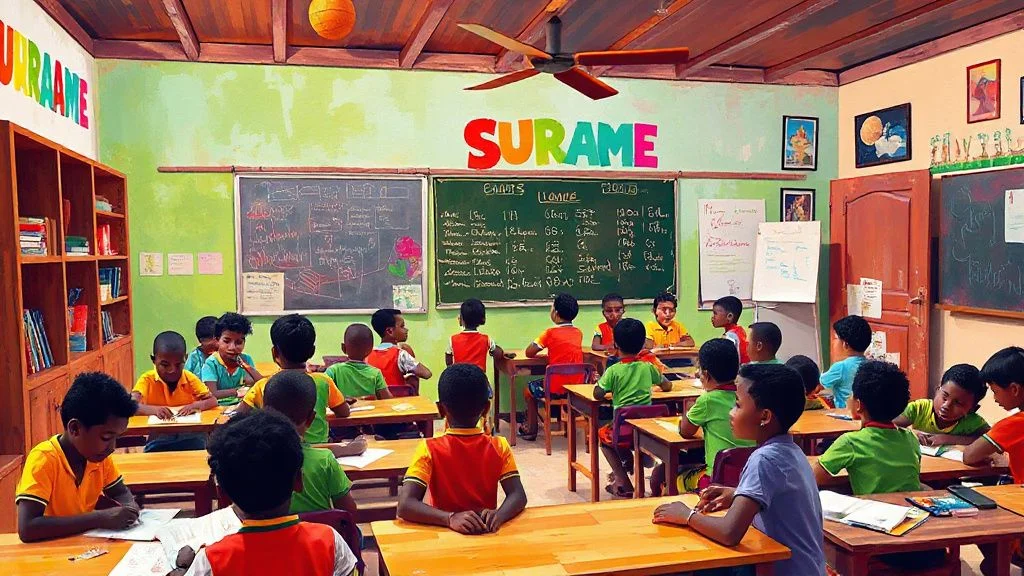
Teaching in Suriname, particularly in public schools, offers a unique opportunity to engage with a diverse student population and contribute to the development of the nation’s education system. This article outlines the qualifications, application procedures, and legal requirements for aspiring teachers, including specific insights for foreign candidates.
Qualifications for Teaching in Public Schools
Educational Background
To secure a teaching position at a public school in Suriname, candidates typically need to possess a relevant educational background. While a Bachelor’s degree in Education or a related field is often preferred, it is not always mandatory. However, having a degree can significantly enhance your chances of being hired, especially in competitive areas like Paramaribo.
In addition to a degree, candidates should consider obtaining a teaching certification. The Ministry of Education in Suriname recognizes various certifications, including those from accredited institutions. For foreign teachers, having a TEFL (Teaching English as a Foreign Language) or TESOL (Teaching English to Speakers of Other Languages) certification can be beneficial, particularly for those teaching English as a second language.
Experience and Skills
Experience in teaching, especially in a classroom setting, is highly valued. Many public schools prefer candidates who have at least one to two years of teaching experience. This experience can be gained through internships, volunteer work, or teaching in private schools. Skills in classroom management, lesson planning, and student engagement are crucial for success in this role.
Additionally, teachers should be adaptable and culturally sensitive, as Suriname is a melting pot of cultures and languages. Familiarity with the local dialects and customs can greatly enhance a teacher's effectiveness and rapport with students.
Application Process for Public School Teaching Positions
Finding Job Openings
Job openings for public school teaching positions in Suriname can be found through various channels. The Ministry of Education's official website regularly posts vacancies, and local job boards may also list opportunities. Networking with current teachers or joining local educational forums can provide valuable insights and leads on available positions.
Additionally, many public schools in Suriname may advertise their vacancies through social media platforms or community bulletin boards. It is advisable for candidates to actively engage with these platforms to stay updated on job openings.
Preparing Your Application
When applying for a teaching position, candidates should prepare a comprehensive application package. This typically includes a well-structured CV, a cover letter tailored to the specific school and position, and copies of relevant certifications and degrees. Highlighting any experience working with diverse populations or in multicultural settings can set your application apart.
In your cover letter, express your passion for teaching and your commitment to contributing to the educational development of Suriname. Mention any specific teaching methodologies or philosophies you adhere to, as schools may be looking for candidates who align with their educational goals.
Legal Requirements for Foreign Teachers
Work Permits and Visas
Foreign candidates looking to teach in public schools in Suriname must obtain a work permit and a residence visa. The application process for these permits can be complex, and it is advisable to start early. Typically, the hiring school will assist successful candidates in obtaining the necessary permits, but candidates should be prepared to provide documentation such as proof of employment, educational qualifications, and a clean criminal record.
The Ministry of Labor in Suriname oversees the issuance of work permits. It is essential to verify the specific requirements and procedures, as they can vary based on nationality and the type of position. The process may take several weeks, so candidates should plan accordingly.
Understanding Local Employment Laws
For a post at a public school the first thing to establish is the regime, because a teacher may be appointed as a landsdienaar under the Personeelswet (G.B. 1962 no. 195, as last amended by S.B. 1987 no. 93) rather than engaged on an ordinary employment contract, and the two differ on dismissal, on pay and on who settles a dispute. Ask which applies to you, in writing. Four things in a Surinamese contract can be checked against a published text, and they are worth going through one by one. The pay: the floor is an hourly one, a general minimum wage of SRD 61.25 gross per hour, in force since 1 July 2026 under decision no. 777/26 of 3 July 2026 and published in the Advertentieblad van de Republiek Suriname; it applies to every sector and no monthly minimum has been fixed. The hours: article 3(1) of the Arbeidswet (Wet van 19 december 1963, G.B. 1963 no. 163) forbids working longer than eight and a half hours a day or forty-eight hours a week, and overtime needs a permit from the Hoofd der Arbeidsinspectie under article 6, with article 12(2) setting the surcharge at no less than one and a half times the wage fixed by time outside the statutory rest days and no less than twice on them. The leave: the Vacantiewet 1975 (S.B. 1975 no. 164c) gives twelve working days after an unbroken calendar year under article 7(1), rising by two a year to a maximum of eighteen, with a holiday allowance of half the wage over those days under article 10(1), and article 3 makes any clause that takes the entitlement away void. And the contract itself: since 1 May 2025 it sits in Book 7, title 10, of the Burgerlijk Wetboek, with article 610(1) defining it. There is no Surinamese labour code, so a clause that cites one is citing nothing.
It is also important to note that public school teachers in Suriname are generally expected to work from 8 AM to 4 PM, Monday to Friday. However, additional hours may be required for lesson planning, grading, and extracurricular activities. Understanding these expectations can help teachers manage their time effectively.
Salary and Benefits
Compensation Structure
This article gives no salary figure for a public school teacher, and the reason is worth knowing because it points at where the answer does sit. For a post at a public school the first thing to establish is the regime: a teacher may be appointed as a landsdienaar under the Personeelswet rather than engaged on an ordinary employment contract, and an appointment is paid according to the scale that belongs to it. Ask in writing which of the two you are being offered, and if it is an appointment, ask which scale and step. Suriname publishes no salary scale per occupation for private-sector work, and the one wage figure that is both published and enforceable there is the floor: the statutory minimum hourly wage, set by ministerial decision on the advice of the Nationale Loonraad and published in the Advertentieblad.
In addition to salary, teachers may receive benefits such as health insurance, paid vacation time, and professional development opportunities. It is advisable for teachers to inquire about these benefits during the interview process to ensure they are adequately compensated for their work.
Cost of Living Considerations
Suriname's cost of living is generally lower than in many Western countries, allowing teachers to enjoy a comfortable lifestyle. Housing, food, and transportation costs are relatively affordable, especially in urban areas like Paramaribo. However, it is important for teachers to budget wisely, as certain imported goods can be expensive.
Teachers should also consider the availability of local amenities and services when choosing where to live. Proximity to schools, markets, and recreational facilities can significantly enhance the living experience in Suriname.
Practical Tips for Teaching in Suriname
Cultural Adaptation
Adapting to the local culture is essential for foreign teachers. Suriname is known for its rich cultural diversity, with influences from Indigenous, African, Asian, and European cultures. Engaging with the community, participating in local events, and learning about Surinamese customs can help teachers build rapport with students and their families.
Language can also be a barrier, as Dutch is the official language, while Sranan Tongo is widely spoken. Learning basic phrases in both languages can facilitate communication and show respect for the local culture.
Building Relationships with Students and Parents
Establishing strong relationships with students and their parents is crucial for success in Suriname's educational environment. Teachers should make an effort to communicate regularly with parents, keeping them informed about their child's progress and school activities. This can be done through newsletters, parent-teacher meetings, and informal gatherings.
Creating an inclusive classroom environment that respects and celebrates cultural diversity will enhance student engagement and learning outcomes. Teachers should incorporate local culture and history into their lessons, making learning relevant and relatable for their students.
Conclusion
Teaching at a public school in Suriname requires a combination of educational qualifications, relevant experience, and a commitment to cultural adaptation. By understanding the application process, legal requirements, and local customs, aspiring teachers can position themselves for success in this rewarding profession. With a supportive community and a vibrant cultural landscape, teaching in Suriname offers a unique opportunity to make a meaningful impact on students' lives.
Primary Sources
Last updated: November 2026