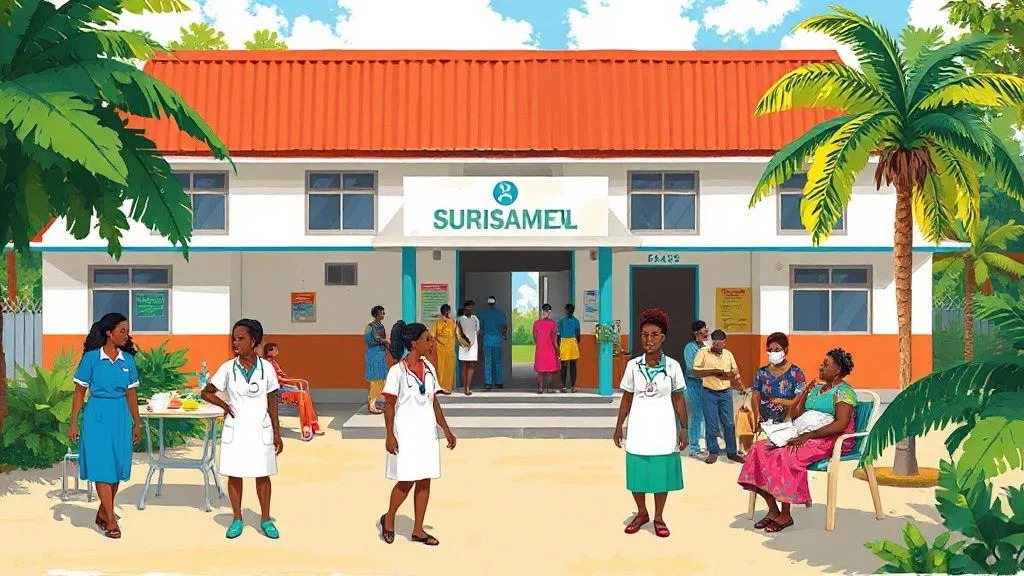
Understanding the salary landscape for nursing positions in Suriname's district hospitals is crucial for both local and foreign job seekers. This article delves into the expected pay, factors influencing salaries, and practical advice for navigating the job market in the healthcare sector.
Overview of Nursing Salaries in Suriname
What this role pays cannot responsibly be given as a range here, and the reason is simply that no such range is published. Suriname has no published salary scale per occupation: the Algemeen Bureau voor de Statistiek issues no wage benchmark by job title, no ministry publishes a pay table for private-sector work, and the figures that turn up on international salary sites are modelled from other countries rather than measured here. The one wage figure that is both published and enforceable is the floor. The minimum hourly wage is SRD 61.25 gross per hour, set by Beschikking no. 777/26 of the Minister of Health, Welfare and Labour of 3 July 2026 on the advice of the Nationale Loonraad, published in the Advertentieblad van de Republiek Suriname, and in force since 1 July 2026; before that it was SRD 52.47 gross per hour, in force from 1 April 2025. No monthly minimum has been fixed, so any monthly equivalent of it is arithmetic and not an official amount.
The article this replaces offered a range on the strength of anecdotal evidence and reports from nurses working in the country. That is worth naming as a problem rather than quietly dropping, because it is the hardest kind of sourcing to check: there is no document to look up, no date to test and no way to tell one nurse's pay slip from a figure somebody assumed. A range attributed to anecdote should carry no more weight than no range at all. What does change the answer materially is who runs the hospital. Where a district hospital is a government institution the nursing posts are graded in function groups under the Personeelswet (G.B. 1962 no. 195) and paid accordingly; where it is run by a foundation the pay follows the employer's own scale or an applicable cao. Asking which of the two applies will get you a real answer where asking for a market range will not.
For instance, a newly graduated nurse may start at the lower end of this spectrum, while those with several years of experience or specialized training may command higher salaries. It’s essential to verify these figures with local hiring authorities or through job postings to get the most accurate and up-to-date information.
Factors Influencing Nursing Salaries
1. Experience and Qualifications
Experience plays a significant role in determining a nurse's salary. Entry-level positions typically offer lower pay, while nurses with advanced degrees or specialized certifications can expect higher compensation. For example, a registered nurse with a Bachelor of Science in Nursing (BSN) and several years of clinical experience may earn significantly more than a nurse with only an associate degree.
Additionally, nurses who take on leadership roles, such as charge nurses or nurse managers, often receive higher salaries due to their increased responsibilities. It's advisable for nurses to pursue continuing education and certifications to enhance their qualifications and increase their earning potential.
2. Type of Hospital and Location
The type of hospital and its location also greatly influence salary levels. District hospitals in urban areas like Paramaribo may offer higher salaries compared to those in rural regions due to the cost of living and demand for healthcare services. Furthermore, hospitals affiliated with international organizations or private entities may provide more competitive salaries and benefits compared to public hospitals.
For example, nurses working in a district hospital that is part of a larger healthcare network may have access to better resources and training opportunities, which can lead to higher salaries. Conversely, nurses in smaller, rural hospitals may face budget constraints that limit salary offerings.
Understanding Contracts and Benefits
When considering a nursing position in Suriname, it’s essential to understand the terms of employment contracts. Contracts may vary significantly between hospitals, so it is crucial to read the fine print carefully. Typically, contracts outline salary, working hours, job responsibilities, and benefits such as health insurance, paid leave, and retirement plans.
In many cases, nurses are expected to work shifts, which can include nights, weekends, and holidays. Understanding the shift patterns and how they may affect work-life balance is vital for prospective nurses. Additionally, some hospitals may offer bonuses or overtime pay for extra hours worked, which can enhance overall earnings.
Work Permits for Foreign Nurses
Foreign nurses seeking employment in Suriname must navigate the work permit process. This process can be complex and varies depending on the applicant's nationality. Generally, foreign applicants need to secure a job offer from a Surinamese employer before applying for a work permit.
The application process typically involves submitting various documents, including proof of qualifications, a valid passport, and a medical certificate. The Ministry of Labor in Suriname oversees work permits, and applicants should consult their official website for the most current requirements and procedures. It’s advisable to allow ample time for the application process, as it can take several weeks to obtain approval.
Salary Expectations and Cost of Living
While the salary range for nurses in Suriname may seem modest, it’s essential to consider the cost of living in the country. Suriname is known for its relatively low cost of living compared to many Western countries. Basic expenses such as housing, food, and transportation can be affordable, allowing nurses to maintain a comfortable lifestyle even on a lower salary.
Living costs are the other half of the question, and they deserve the same discipline as the salary. The rent figures that used to stand in this paragraph had no source attached to them, and quoting a rent band for Paramaribo without a measurement date is no more reliable than quoting a salary band without one, particularly where the exchange rate moves. If you are weighing an offer, price the actual things: ask for current asking rents in the specific district you would live in, and set those against the gross wage and the withholding described below rather than against an average.
That still leaves a good deal you can establish before accepting an offer. Ask for the gross wage per hour or per month in writing and check it against the statutory minimum hourly wage. Ask which collective labour agreement applies, if any: a cao sets the wage scale for a sector, it may improve on the statutory floor but can never go below it, and a new cao has to be registered with the Ministry of Labour within fifteen days of signing, so whether one exists is a matter of record rather than of opinion. Then ask what will be withheld. Wage tax is progressive, at 8% on monthly wages up to SRD 3,500 then 18% up to SRD 7,000 then 28% up to SRD 10,500 and 38% above that, with a tax-free allowance of SRD 9,000 a month below which nothing is withheld at all. Overtime is taxed from its own rate table rather than from these brackets, and a gratuity is exempt up to SRD 19,500 a year. Those rules come from the Wet Loonbelasting (S.B. 1981 no. 181) as the Belastingdienst publishes it, and they tell you more about take-home pay than any salary range on the internet will. One caution worth carrying: the wage-tax page on gov.sr is out of date and still names a far lower tax-free allowance, so a government domain is not by itself proof that a figure is current.
Practical Tips for Job Seekers
1. Research and Networking
Job seekers should conduct thorough research on potential employers and network with current or former employees. Online forums, social media groups, and professional organizations can provide valuable insights into the working conditions and salary expectations at various hospitals. Engaging with local nursing associations can also help expand your professional network and uncover job opportunities.
2. Prepare for Interviews
When applying for nursing positions, candidates should prepare for interviews by familiarizing themselves with common interview questions and practicing their responses. Highlighting relevant experience, skills, and a genuine passion for nursing can make a positive impression on potential employers. Additionally, understanding the healthcare system in Suriname and demonstrating cultural competence can set candidates apart from others.
3. Consider Language Skills
Proficiency in Dutch is often a requirement for nursing positions in Suriname, as it is the official language. Foreign nurses should consider taking language courses to improve their communication skills, which can enhance their employability and ease their transition into the local healthcare environment.
What Expats Should Know
Expats considering a nursing career in Suriname should be aware of cultural differences and the local healthcare system. Familiarizing oneself with the customs, traditions, and healthcare practices in Suriname can facilitate a smoother integration into the workplace and community.
Additionally, understanding the legal framework surrounding employment and labor rights in Suriname is crucial. The Ministry of Labor provides resources and information on workers' rights, which can help expats navigate potential challenges in the workplace.
Conclusion
In summary, nursing positions in district hospitals in Suriname offer a unique opportunity for both local and foreign candidates. While salaries may vary based on experience, qualifications, and hospital type, understanding the broader context of living costs and employment conditions is essential. By conducting thorough research, preparing for interviews, and considering language skills, job seekers can enhance their chances of securing a rewarding nursing position in Suriname.