Understanding the salary landscape for logistics roles at container terminals in Suriname is essential for job seekers and employers alike. This article delves into the compensation structures, job expectations, and qualifications required for these roles, providing valuable insights for both local and foreign candidates.
Overview of Logistics Roles at Container Terminals
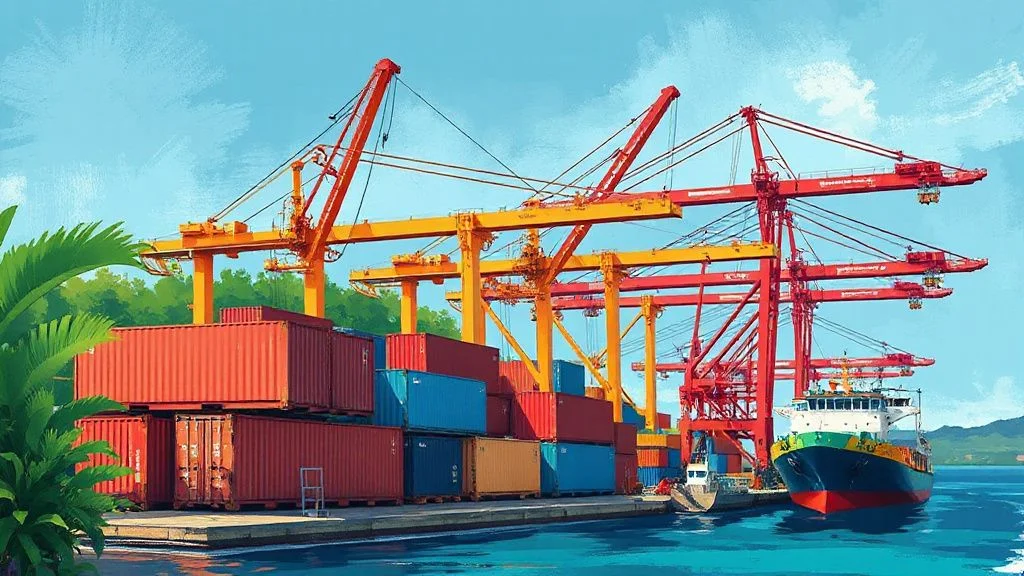
Logistics roles at container terminals encompass a variety of positions, including logistics coordinators, operations managers, and supply chain analysts. These positions are critical in ensuring the smooth operation of port activities, managing the flow of goods, and coordinating transportation logistics. The container terminal in Suriname, operated by DP World, plays a vital role in the country’s import and export activities, making these roles particularly significant.
Typically, logistics professionals at container terminals are responsible for overseeing the movement of containers, managing inventory, and ensuring compliance with local and international shipping regulations. The complexity of these tasks requires a blend of technical skills, industry knowledge, and effective communication abilities.
Salary Expectations for Logistics Roles
What this role pays cannot responsibly be given as a range here, and the reason is simply that no such range is published. Suriname has no published salary scale per occupation: the Algemeen Bureau voor de Statistiek issues no wage benchmark by job title, no ministry publishes a pay table for private-sector work, and the figures that turn up on international salary sites are modelled from other countries rather than measured here. The one wage figure that is both published and enforceable is the floor. The minimum hourly wage is SRD 61.25 gross per hour, set by Beschikking no. 777/26 of the Minister of Health, Welfare and Labour of 3 July 2026 on the advice of the Nationale Loonraad, published in the Advertentieblad van de Republiek Suriname, and in force since 1 July 2026; before that it was SRD 52.47 gross per hour, in force from 1 April 2025. No monthly minimum has been fixed, so any monthly equivalent of it is arithmetic and not an official amount.
The figure of roughly three and a half thousand US dollars a month that circulates for a logistics coordinator here, attributed to a report by DP World, does not survive checking: DP World publishes no wage benchmark for Suriname, and the date stamp carried with that figure is older than the article repeating it. Treat an attribution of that shape, where a terminal operator or a shipping line is named as the source of a salary table, as a reason to look for the table rather than a reason to trust the number.
More senior logistics roles do pay more, and they do ask for longer experience and a demonstrable record, but the step up cannot be quantified from any published source either. What can be set out is where the work sits. The container terminal is at the port that has been officially called Dr. Jules Sedney Haven since 2016, previously known as Nieuwe Haven. Havenbeheer Suriname, established in 1971, is the port authority and acts as landlord rather than as a cargo handler, so the handling operation and the employer behind a terminal vacancy are not the same body as the port authority. DP World came into the terminal through the acquisition of Integra Port Services, which obtained a fifteen-year concession with an extension option in April 2010, with DP World taking a majority stake in 2011. Knowing which of those entities would actually employ you is worth more than a salary range, because it determines which collective agreement and which pay scale apply.
That still leaves a good deal you can establish before accepting an offer. Ask for the gross wage per hour or per month in writing and check it against the statutory minimum hourly wage. Ask which collective labour agreement applies, if any: a cao sets the wage scale for a sector, it may improve on the statutory floor but can never go below it, and a new cao has to be registered with the Ministry of Labour within fifteen days of signing, so whether one exists is a matter of record rather than of opinion. Then ask what will be withheld. Wage tax is progressive, at 8% on monthly wages up to SRD 3,500 then 18% up to SRD 7,000 then 28% up to SRD 10,500 and 38% above that, with a tax-free allowance of SRD 9,000 a month below which nothing is withheld at all. Overtime is taxed from its own rate table rather than from these brackets, and a gratuity is exempt up to SRD 19,500 a year. Those rules come from the Wet Loonbelasting (S.B. 1981 no. 181) as the Belastingdienst publishes it, and they tell you more about take-home pay than any salary range on the internet will. One caution worth carrying: the wage-tax page on gov.sr is out of date and still names a far lower tax-free allowance, so a government domain is not by itself proof that a figure is current.
Factors Influencing Salary Levels
Several factors influence salary levels for logistics roles at container terminals in Suriname. These include:
- Experience: More experienced professionals typically command higher salaries. Entry-level positions may start lower, but with experience, salaries can increase significantly.
- Qualifications: Holding relevant certifications, such as a Certified Supply Chain Professional (CSCP) or a logistics management degree, can enhance earning potential.
- Company Size: Larger companies or those with more complex operations may offer higher salaries compared to smaller firms.
- Job Responsibilities: Positions with greater responsibility, such as managing teams or overseeing significant projects, often come with higher compensation.
Job Qualifications and Skills Required
To secure a logistics role at a container terminal, candidates typically need a combination of education and experience. Most positions require at least a bachelor’s degree in logistics, supply chain management, or a related field. Additionally, employers often look for candidates with:
- Strong Analytical Skills: The ability to analyze data and make informed decisions is crucial in logistics roles.
- Communication Skills: Effective communication with various stakeholders, including shipping companies, customs officials, and team members, is essential.
- Problem-Solving Abilities: Logistics professionals must be able to quickly address issues that arise during shipping and handling processes.
- Technical Proficiency: Familiarity with logistics software and tools is increasingly important in managing operations efficiently.
What to Expect During the Hiring Process
The hiring process for logistics roles at container terminals in Suriname typically involves several stages. Candidates can expect:
- Application Submission: Applicants usually submit a CV and cover letter highlighting their relevant experience and qualifications.
- Interviews: Shortlisted candidates may undergo multiple interviews, including technical assessments to evaluate their logistics knowledge.
- Background Checks: Employers often conduct background checks to verify employment history and qualifications.
It’s advisable for candidates to prepare thoroughly for interviews by researching the company, understanding the logistics industry in Suriname, and being ready to discuss their previous experiences and how they relate to the role they are applying for.
Practical Tips for Job Seekers
For those seeking logistics roles at container terminals in Suriname, here are some practical tips:
- Network: Building connections within the industry can lead to job opportunities. Attend industry events, join professional organizations, and connect with professionals on platforms like LinkedIn.
- Tailor Your CV: Customize your CV to highlight relevant skills and experiences that align with the job description. Use keywords from the job posting to increase your chances of getting noticed.
- Stay Informed: Keep up with industry trends and changes in logistics regulations. This knowledge can be beneficial during interviews and can help you stand out as a candidate.
- Consider Internships: If you are new to the field, consider internships or entry-level positions to gain experience and build your resume.
What Expats Should Know
For expatriates considering logistics roles at container terminals in Suriname, there are several important factors to keep in mind:
- Work Permits: Foreign candidates will need to obtain a work permit to work legally in Suriname. The process typically involves securing a job offer and having the employer sponsor the application. It’s advisable to consult with the Ministry of Labor or a legal professional to understand the requirements.
- Cultural Adaptation: Understanding local customs and business practices can facilitate smoother interactions with colleagues and clients. Being open to learning about Surinamese culture can enhance your experience.
- Cost of Living: While salaries may be competitive, it’s essential to consider the cost of living in Suriname, which can vary significantly from other countries. Research housing, transportation, and daily expenses to budget effectively.
Conclusion
Logistics roles at container terminals in Suriname offer competitive salaries and opportunities for career advancement. Understanding the salary landscape, job qualifications, and the hiring process can significantly enhance your chances of securing a position in this vital sector. For expatriates, being aware of work permit requirements and cultural nuances is crucial for a successful transition. By following the practical tips outlined in this article, job seekers can navigate the logistics job market in Suriname more effectively.
Primary Sources
Last updated: November 2026