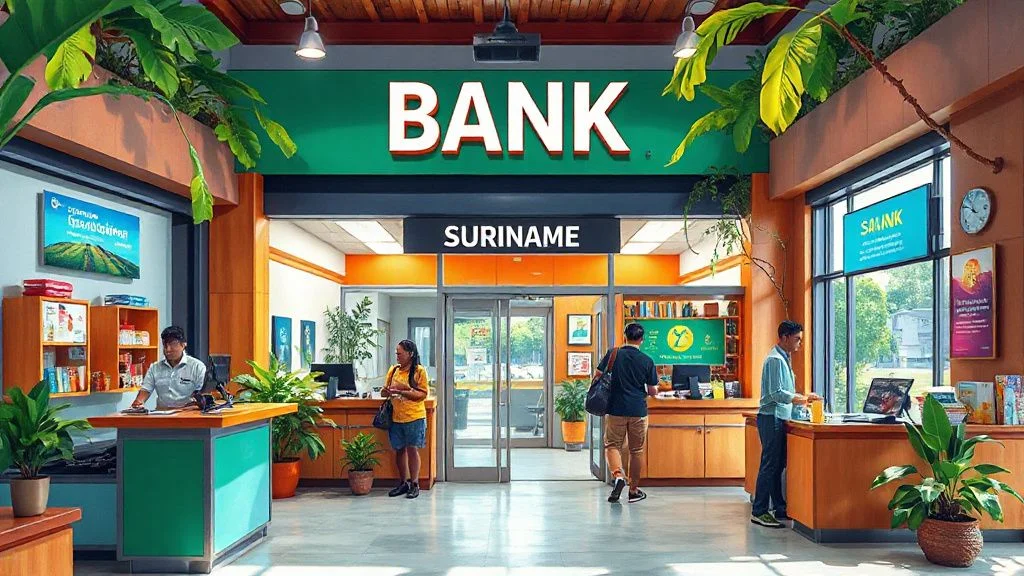
Working in a commercial bank branch in Suriname presents unique opportunities and challenges. Understanding the types of contracts required for various roles within these institutions is crucial for both job seekers and employers. This article explores the essential contracts needed for roles at commercial bank branches, the legal framework governing employment in Suriname, and practical advice for navigating the hiring process.
Types of Employment Contracts in Banking
In Suriname, employment contracts can vary significantly based on the nature of the job, the level of responsibility, and the specific bank's policies. Generally, there are three main types of contracts that may be offered for positions in a commercial bank branch:
1. Fixed-Term Contracts
Fixed-term contracts are commonly used for temporary positions or specific projects within a bank. These contracts specify a start and end date, and they are often utilized for roles such as seasonal tellers or project-based positions in marketing or IT departments. For example, a bank may hire additional staff during the busy holiday season to manage increased customer traffic.
It is important for candidates to understand that fixed-term contracts may not offer the same benefits as permanent contracts, such as job security or long-term career progression. However, they can provide valuable experience and networking opportunities within the banking sector.
2. Permanent Contracts
Permanent contracts are typically offered to employees who are hired for ongoing roles within the bank. These contracts provide job security and often come with a comprehensive benefits package, including health insurance, retirement plans, and paid leave. Positions such as branch managers, loan officers, and customer service representatives usually fall under this category.
When entering into a permanent contract, it is essential for employees to review the terms carefully. Key elements to look for include salary, working hours, responsibilities, and termination clauses. Understanding these details can help prevent misunderstandings later in the employment relationship.
3. Probationary Contracts
A probationary period in Suriname is what the contract says it is; no published figure fixes a usual length for bank work, so a range quoted for it is somebody's impression rather than a measured norm. During this time, both the employee and employer assess whether the fit is right. Probationary contracts may be less formal than permanent contracts, but they still outline essential terms such as salary, job responsibilities, and evaluation criteria.
It is advisable for candidates to clarify the expectations during the probationary period, including performance metrics and feedback mechanisms. This clarity can help ensure a successful transition into a permanent role.
Legal Framework Governing Employment Contracts
Suriname's private law shares its origins with Dutch civil law, but there is no single consolidated employment statute: the rights and duties of a bank and its staff are spread over several laws. The employment contract sits in the Surinamese Burgerlijk Wetboek, in Book 7, title 10, whose article 610(1) defines the employment contract since the new code came into force on 1 May 2025; working hours and rest days sit in the Arbeidswet 1963 (Wet van 19 december 1963, G.B. 1963 no. 163); annual leave sits in the Vacantiewet 1975 (Wet van 24 november 1975, S.B. 1975 no. 164c); and the wage floor is fixed by ministerial decision. The points that matter in practice:
1. Minimum Wage and Salary Regulations
No salary figures for banking roles in Suriname are published, and there is no salary scale per function to check them against. The one published and enforceable floor is the general minimum wage, which is an hourly one: SRD 61.25 gross per hour, in force since 1 July 2026 under decision no. 777/26 of 3 July 2026, taken on the advice of the Nationale Loonraad and published in the Advertentieblad van de Republiek Suriname. It applies to every sector, and no monthly minimum has been fixed. Ask the bank for the gross hourly wage and the contracted hours, and set those two against the floor.
Employers are required to pay at least the minimum wage, and many banks offer salaries above this threshold to attract qualified candidates. Understanding the typical salary range for specific roles can aid candidates in negotiations.
2. Employee Rights and Benefits
Employees in Suriname are entitled to various rights and benefits, including paid leave, sick leave, and maternity leave. The leave entitlement comes from the Vacantiewet 1975: article 7(1) gives twelve working days of paid leave after an unbroken calendar year with the same employer, rising by two working days for each further unbroken calendar year up to a maximum of eighteen. For a first, partial year article 7(3) gives one working day per full month of service, and article 3 makes any clause that takes the entitlement away void. On top of the wage, article 10(1) obliges the employer to pay a holiday allowance equal to half the wage due over those days. Additionally, banks often provide health insurance and retirement benefits as part of their employment packages.
It is crucial for job seekers to inquire about these benefits during the hiring process, as they can significantly impact overall job satisfaction and financial security.
Key Components of Employment Contracts
Regardless of the type of contract, several key components should be included in any employment agreement at a commercial bank:
1. Job Description and Responsibilities
A clear job description is vital for both parties. It should outline the specific duties and responsibilities associated with the role, including any performance expectations. For instance, a customer service representative may be responsible for handling customer inquiries, processing transactions, and promoting bank products.
Having a detailed job description helps prevent role ambiguity and ensures that employees know what is expected of them from the outset.
2. Salary and Payment Terms
The contract should specify the salary amount, payment frequency (monthly, bi-weekly), and any bonuses or commissions that may apply. For example, a loan officer might have a base salary plus performance-based incentives tied to loan approvals.
Understanding payment terms is crucial for financial planning, so candidates should ensure that these details are clearly articulated in their contracts.
3. Termination Clauses
Contracts should include termination clauses that outline the conditions under which either party can terminate the employment relationship. This may include notice periods, grounds for dismissal, and severance pay provisions. The notice you owe is the notice written into your own contract. Suriname also operates a dismissal-permit procedure, the ontslagvergunning, applied for at the labour ministry, so ask which route the bank would use rather than relying on a period quoted elsewhere.
Being aware of these clauses can help employees navigate potential employment challenges and understand their rights in case of termination.
What to Expect During the Hiring Process
The hiring process for roles at commercial banks in Suriname typically involves several stages, including application submission, interviews, and background checks. Here’s what candidates can expect:
1. Application Submission
Job seekers should prepare a tailored CV and cover letter that highlight relevant experience and skills. It is advisable to research the bank and its values to align the application with the institution's goals. For example, if a bank emphasizes customer service excellence, candidates should showcase their experience in similar roles.
Many banks in Suriname also require candidates to submit references, so it is beneficial to have professional contacts ready to vouch for your qualifications.
2. Interviews
Interviews may be conducted in multiple rounds, often starting with a phone interview followed by in-person meetings. Candidates should prepare for behavioral questions that assess their problem-solving abilities, teamwork, and customer service skills. For instance, a candidate might be asked to describe a time they resolved a difficult customer issue.
Additionally, candidates should be ready to discuss their understanding of banking products and services, as well as any relevant regulations that impact the industry.
Practical Tips for Job Seekers
For expatriates and local candidates alike, navigating the job market in Suriname's banking sector can be challenging. Here are some practical tips to enhance your job search:
1. Networking
Building a professional network is essential in Suriname's banking sector. Attend industry events, workshops, and seminars to connect with professionals in the field. Engaging with local banking associations can also provide valuable insights and job leads.
2. Understand Work Permits for Foreign Candidates
Foreign candidates seeking employment in Suriname must obtain a work permit. The process involves submitting an application to the Ministry of Labor, which includes documentation such as a valid passport, proof of employment offer, and a medical certificate. It is advisable to consult with a licensed immigration professional to navigate this process effectively.
Conclusion
Understanding the types of contracts required for roles at commercial bank branches in Suriname is essential for both job seekers and employers. By familiarizing themselves with the legal framework, key components of employment contracts, and the hiring process, candidates can position themselves for success in the banking sector. Networking and understanding work permit requirements are additional steps that can enhance job prospects for expatriates. With the right preparation and knowledge, individuals can thrive in Suriname's dynamic banking environment.