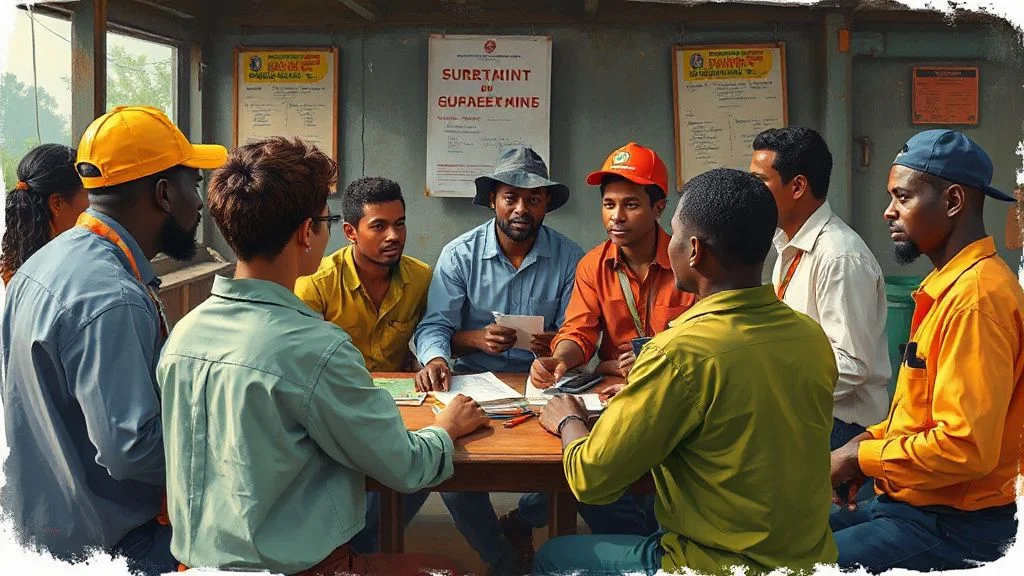
Understanding the role of collective agreements in unionised sectors is essential for both employees and employers. Collective agreements are legally binding contracts negotiated between unions and employers that outline the terms and conditions of employment. This article will explore what you bring to a collective agreement, the significance of your contributions, and how they impact the overall labor relations landscape in Suriname.
Understanding Collective Agreements
Collective agreements set the framework for labour relations and usually cover pay, working hours, benefits and workplace safety. Suriname has no consolidated labour code, so a text that cites one is citing something that does not exist. Collective agreements rest on the Wet Collectieve Arbeidsovereenkomst (G.B. 1962 no. 106, as amended by the law of 15 December 2016, S.B. 2016 no. 152), and the right to organise on the Wet Vrijheid Vakvereniging (S.B. 2016 no. 151). That law sets real and checkable rules: an agreement runs for at most three years including any extension, it binds employees who are not union members unless the parties agree otherwise, and a new agreement must be registered with the Ministry of Labour within fifteen days of signing.
In a unionised sector, collective agreements are negotiated by representatives of the workers' union and the employer. These negotiations are crucial as they ensure that the interests of workers are represented and that they receive fair treatment in the workplace. The process is often collaborative, requiring both parties to come to the table with a willingness to compromise and find common ground.
Your Contributions to Collective Agreements
1. Knowledge and Expertise
One of the most significant contributions you can bring to a collective agreement is your knowledge of industry standards and of the instruments that actually apply. There is no Surinamese labour code to cite: collective agreements rest on the Wet Collectieve Arbeidsovereenkomst (G.B. 1962 no. 106, as amended by the law of 15 December 2016, S.B. 2016 no. 152), the right to organise on the Wet Vrijheid Vakvereniging (S.B. 2016 no. 151), and alongside them the ILO conventions Suriname has ratified. Knowing which instrument covers what is what lets you argue a point instead of asserting one, and it shows you where an agreement can be improved.
Additionally, your expertise in specific job roles or industries can provide valuable insights during negotiations. For instance, if you work in a sector that is experiencing rapid changes due to technological advancements, your input can help shape provisions that address training and skill development, ensuring that workers are prepared for future challenges.
2. Solidarity and Collective Action
Bringing a sense of solidarity to the negotiation table is another critical aspect of contributing to a collective agreement. Collective bargaining is rooted in the idea that workers are stronger together. By standing united with your colleagues, you can amplify your voice and increase the pressure on employers to meet your demands. This solidarity can manifest in various forms, such as participating in union meetings, rallies, or other collective actions that demonstrate the strength of the workforce.
Moreover, fostering a culture of solidarity within your union can lead to more effective negotiations. When workers feel supported by their peers, they are more likely to engage actively in the bargaining process and advocate for their rights. This collective approach not only benefits individual workers but also enhances the overall effectiveness of the union in representing its members.
The Importance of Negotiation Skills
1. Effective Communication
Effective communication is a cornerstone of successful negotiations. Being able to articulate your needs and concerns clearly can significantly influence the outcome of collective bargaining. This includes not only expressing your own views but also actively listening to the perspectives of others. Understanding the employer's position and concerns can help you identify areas for compromise and collaboration.
In Suriname, where the labor market is evolving, being able to communicate effectively can also help bridge gaps between different stakeholders, including government representatives, employers, and other unions. This collaborative approach can lead to more comprehensive and inclusive collective agreements that address the needs of all parties involved.
2. Conflict Resolution
Negotiations can often lead to conflicts, whether over wage increases, working conditions, or other terms of employment. Your ability to navigate these conflicts and find resolutions is essential. This may involve employing various conflict resolution strategies, such as mediation or compromise, to reach an agreement that satisfies both parties.
In a unionised sector, having skilled negotiators who can handle conflicts effectively can prevent disputes from escalating and ensure that the collective agreement process remains constructive. This not only benefits the current negotiations but also sets a positive precedent for future bargaining sessions.
What Expats Should Know
For expatriates working in Suriname, knowing which rules apply and what a collective agreement adds to them is crucial. As a foreign worker you may have different rights and responsibilities than your Surinamese colleagues, and that difference usually follows from your own contract and your work permit rather than from the sector agreement. Read the Wet Collectieve Arbeidsovereenkomst and the agreement for your own sector, and ask the Ministry of Labour whether an agreement has been registered for that sector: a new agreement has to be registered there within fifteen days of signing.
Additionally, engaging with local unions can provide valuable insights into the collective bargaining process and help you navigate any challenges you may face as a foreign worker. Building relationships with your colleagues and union representatives can enhance your understanding of the labor landscape in Suriname and empower you to contribute effectively to collective agreements.
Conclusion
Your contributions to a collective agreement in a unionised sector are vital for ensuring fair labor practices and improving working conditions. By bringing your knowledge, solidarity, and negotiation skills to the table, you can help shape agreements that benefit not only yourself but also your colleagues and the broader workforce. Understanding the collective bargaining process and actively participating in it is essential for fostering a strong labor movement in Suriname.