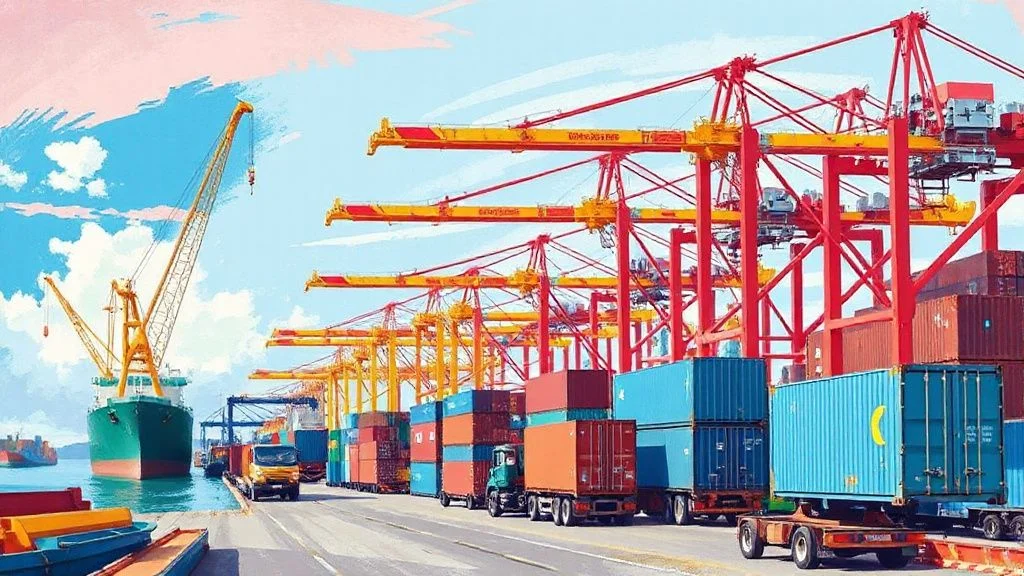
When seeking a logistics role at a container terminal in Suriname, understanding the specific contract requirements is crucial. This article will guide you through the types of contracts typically involved, the legal framework governing these contracts, and practical advice for both job seekers and employers in the logistics sector.
Types of Contracts in Logistics Roles
Logistics roles at container terminals often involve various types of contracts, depending on the nature of the employment and the specific requirements of the job. The most common types include:
1. Employment Contracts
Employment contracts are the most straightforward agreements between an employer and an employee. These contracts outline the terms of employment, including job responsibilities, salary, working hours, and benefits. In Suriname the employment contract itself is governed by the Burgerlijk Wetboek, while working hours and rest days come from the Arbeidswet 1963 and the wage floor from a ministerial decision; no single statute covers all three.
Typically, these contracts are either fixed-term or indefinite. Fixed-term contracts are common for logistics roles that are project-based or seasonal, while indefinite contracts provide more job security. It's essential for both parties to clearly understand the terms of the contract, including any probationary periods and termination clauses.
2. Service Agreements
Service agreements are contracts between a company and a service provider, such as a logistics firm or a freight forwarder. These agreements specify the services to be provided, payment terms, and the duration of the contract. For example, a logistics company may enter into a service agreement with a container terminal to manage the loading and unloading of cargo.
In Suriname, service agreements should include detailed descriptions of the services, performance metrics, and penalties for non-compliance. This is particularly important in the logistics sector, where delays can lead to significant financial losses. Ensure that the agreement complies with local regulations and includes clauses for dispute resolution.
Legal Framework Governing Logistics Contracts
Understanding the legal framework governing logistics contracts in Suriname is essential for both employers and employees. The legal system is based on Dutch civil law, and several laws and regulations apply to employment and service contracts.
1. Which statutes actually apply
Suriname has no consolidated employment statute, so three separate sources govern a job at the terminal. The Burgerlijk Wetboek governs the employment contract, the Arbeidswet 1963 (Wet van 19 december 1963, G.B. 1963 no. 163) governs working hours and rest days, and the wage floor is fixed by ministerial decision on the advice of the Nationale Loonraad. The points worth checking:
- Minimum wage: the floor is an hourly one. It stands at SRD 61.25 gross per hour, in force since 1 July 2026 under decision no. 777/26 of 3 July 2026, taken on the advice of the Nationale Loonraad and published in the Advertentieblad van de Republiek Suriname, and it applies to every sector. No monthly minimum has been fixed.
- Working hours: article 3(1) of the Arbeidswet 1963 caps ordinary work at 8.5 hours a day or 48 hours a week. A 40-hour week is a contractual arrangement, not a statutory limit. Overtime requires a permit from the Arbeidsinspectie and carries a surcharge of 150 per cent of the fixed wage, or 200 per cent on a Sunday or an equivalent rest day.
- Termination Rights: The code outlines the rights of both employers and employees regarding termination of contracts.
2. Wetboek van Koophandel
Suriname's commercial code is the Wetboek van Koophandel (G.B. 1936 no. 115, as amended up to S.B. 2003 no. 93, published by the Stichting Rechtsinformatie Suriname). It governs dealings between businesses, so it is the place to look for a service agreement between a forwarder and a terminal operator. It does not set employment terms: those come from the Burgerlijk Wetboek and the Arbeidswet 1963.
Key Considerations for Contracts in Logistics Roles
When drafting or reviewing contracts for logistics roles at container terminals, several key considerations should be taken into account:
1. Clarity and Specificity
Contracts should be clear and specific to avoid misunderstandings. All parties should understand their rights and obligations. For instance, a logistics coordinator's responsibilities should be explicitly outlined, including tasks related to inventory management, transportation coordination, and communication with shipping lines.
2. Compliance with Local Laws
Contracts must comply with local laws and regulations. Employers should take legal advice to check that their contracts match the Burgerlijk Wetboek and the Arbeidswet 1963; the Wetboek van Koophandel covers dealings between businesses and not employment terms. This is particularly important for foreign companies operating in Suriname, as they may be subject to additional regulations.
What Expats Should Know
For expatriates seeking logistics roles at container terminals in Suriname, understanding the local labor market and legal requirements is vital. Here are some practical tips:
1. Work Permits
Foreign candidates must obtain a work permit to work legally in Suriname. The process typically involves securing a job offer from a local employer who will sponsor the work permit application. The employer must demonstrate that no local candidates are available for the position. The application process can take several weeks, so it is advisable to start early.
2. Cultural Considerations
Understanding the local culture and business practices can significantly impact your success in the logistics sector. Suriname has a diverse population, and building relationships with colleagues and clients is essential. Being respectful of local customs and practices will help you integrate into the workplace more smoothly.
Common Pitfalls in Logistics Contracts
Both employers and employees should be aware of common pitfalls when dealing with logistics contracts:
1. Ambiguity in Terms
Ambiguous terms can lead to disputes. For example, if a contract does not clearly define the scope of work for a logistics coordinator, it may result in misunderstandings about responsibilities. Always ensure that contracts are detailed and specific.
2. Ignoring Local Regulations
Failing to comply with local regulations can result in legal issues. Employers should work from the actual texts of the Burgerlijk Wetboek and the Arbeidswet 1963 rather than from a summary. Consulting with a legal professional can help ensure compliance.
Practical Tips for Employers
Employers in the logistics sector should consider the following tips when drafting contracts:
1. Use Standard Templates
Using standard contract templates can save time and ensure that all necessary clauses are included. However, it is essential to customize these templates to reflect the specific needs of your organization and the role.
2. Regularly Review Contracts
Contracts should be reviewed regularly to ensure they remain compliant with changing laws and regulations. This is particularly important in the logistics sector, where regulations may evolve due to changes in trade agreements or customs laws.
Conclusion
In summary, understanding the contract requirements for logistics roles at container terminals in Suriname is essential for both job seekers and employers. Employment contracts and service agreements must comply with local laws, be clear and specific, and address the unique challenges of the logistics sector. For expatriates, navigating the work permit process and understanding cultural nuances can enhance their chances of success. By avoiding common pitfalls and adhering to best practices, both employers and employees can foster a productive and legally compliant working environment.