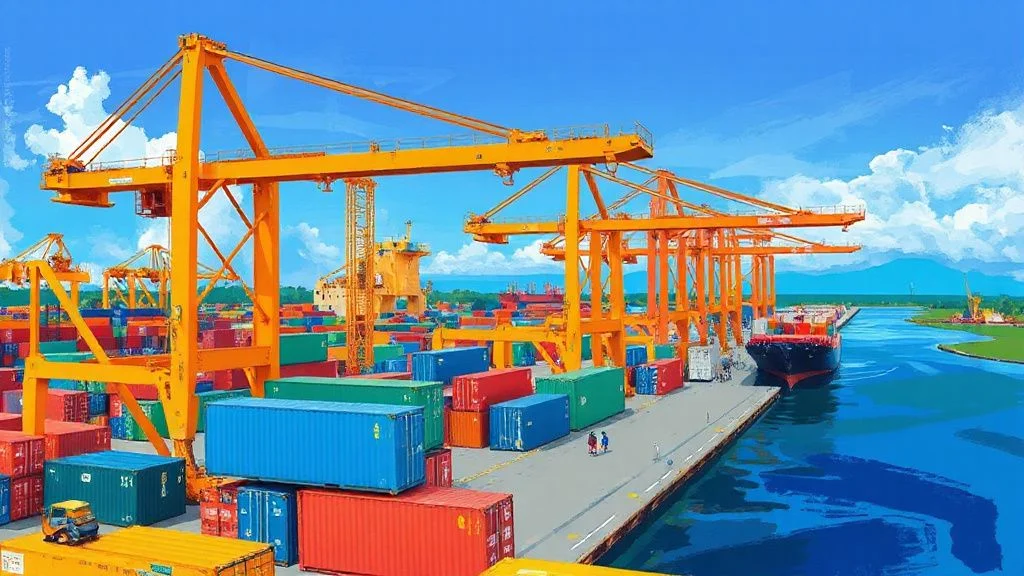
The oil and gas supply chain in Suriname is rapidly evolving, driven by significant investments and exploration activities in the region. As the country prepares to tap into its offshore oil reserves, understanding the salary expectations for various roles within this sector is crucial for both job seekers and employers. This article provides an in-depth look at what professionals can expect to earn in the oil and gas supply chain in Suriname, along with insights into contracts, work permits, and industry standards.
Overview of the Oil and Gas Sector in Suriname
Suriname's oil and gas sector is on the brink of transformation, with major players like TotalEnergies and Staatsolie leading the charge. The country has not yet begun large-scale oil production, but significant investments are being made in exploration and infrastructure. A projection published by the consultancy Rystad Energy in 2023 put capital investment in Suriname's upstream sector at some nine and a half billion dollars over 2023 to 2027. It is worth reading as what it is: a three-year-old forecast by a commercial research house, not an official figure and not a measurement of what has since been spent.
As the sector grows, so does the demand for skilled professionals across various roles in the supply chain, including engineering, logistics, procurement, and project management. Understanding the salary landscape in this burgeoning field is essential for attracting and retaining talent.
Salary Ranges for Key Roles in the Oil and Gas Supply Chain
While specific salary figures for roles in Suriname's oil and gas supply chain are not always publicly available, industry standards and regional benchmarks can provide valuable insights. Here are some typical salary ranges for key positions:
1. Engineers
Suriname publishes no salary scale per job. No ministry, statistics office or professional body puts one out, so a range quoted for a role comes from vacancies and recruiters rather than from a register, and a label such as industry reports or local job postings is not a source a reader can check. The one published and enforceable figure is the general minimum hourly wage: SRD 61.25 gross per hour, in force since 1 July 2026 under decision no. 777/26 of 3 July 2026, taken on the advice of the Nationale Loonraad and published in the Advertentieblad van de Republiek Suriname, and it applies to every sector. No monthly minimum has been fixed. What you can establish in your own case is the gross hourly wage, the number of contracted hours, the pay date and the deductions the employer applies. Ask for those four in writing and set the first against that floor.
2. Project Managers
That is not a counsel of despair. The figures that matter to you personally are knowable: a written offer states the gross wage and the hours, a pay slip states the deductions, and the statutory floor is public. What is not knowable from outside is the market level per role, and an article that prints one anyway is guessing on your behalf.
3. Procurement Specialists
For a procurement, logistics or safety role the same applies, and there is one extra thing worth asking about in this sector: whether the post is with an operator, with a service company or through an agency, because that decides who your employer actually is and therefore whose pay slip and whose terms apply to you.
4. Logistics Coordinators
Hours are worth settling at the same time as pay, because offshore and rotational work runs into a hard statutory ceiling: article 3(1) of the Arbeidswet forbids working or being made to work longer than eight and a half hours a day or forty-eight hours a week, overtime is lawful only with a permit from the Hoofd der Arbeidsinspectie under article 6, and article 12(2) sets the surcharge at no less than one and a half times the wage fixed by time outside the statutory rest days and no less than twice on them, with article 13(1) requiring at least twice for work on a Sunday or a day treated as such.
5. Safety and Environmental Officers
Leave is the third thing to put in writing. The Vacantiewet 1975 (Wet van 24 november 1975, S.B. 1975 no. 164c) gives twelve working days of paid leave after an unbroken calendar year with the same employer under article 7(1), rising by two working days for each further unbroken year to a maximum of eighteen, with one working day per full month in a first, partial year under article 7(3). Article 3 makes any clause that takes the entitlement away void, and article 10(1) adds a holiday allowance equal to half the wage due over those days.
Factors Influencing Salaries in the Oil and Gas Sector
Several factors can influence salary levels in Suriname's oil and gas supply chain:
- Experience: As in many industries, experience plays a significant role in determining salary. Professionals with more years in the field or specialized skills tend to earn higher wages.
- Education: Advanced degrees or certifications in relevant fields can enhance earning potential. For example, engineers with a master's degree may command higher salaries than those with only a bachelor's degree.
- Company Size: Larger multinational companies often offer more competitive salaries and benefits compared to smaller local firms. This is particularly true in the oil and gas sector, where major players are investing heavily in the region.
- Project Scope: The scale and complexity of projects can also impact salaries. Professionals working on large-scale projects may receive premium compensation due to the increased responsibilities and risks involved.
Contracts and Employment Types in the Oil and Gas Sector
In Suriname, employment in the oil and gas sector can take various forms, including permanent positions, contract roles, and temporary assignments. Each type of employment comes with different implications for salary, benefits, and job security.
1. Permanent Positions
Permanently employed professionals typically enjoy more job security and benefits, such as health insurance and retirement plans. Salaries for permanent roles in the oil and gas supply chain are generally higher than those for contract positions, reflecting the long-term commitment of both the employer and employee.
2. Contract Roles
Contract roles are common in the oil and gas industry, especially for project-based work. Contractors may earn higher hourly rates compared to their permanent counterparts, but they often lack benefits such as health insurance and paid leave. Contract salaries can vary widely based on the specific skills required and the duration of the project.
3. Temporary Assignments
Temporary assignments are typically short-term and may be used to fill gaps during peak project phases. While these roles can offer competitive pay, they often come with less stability and fewer benefits. Temporary workers should be prepared for the possibility of fluctuating income based on project availability.
Work Permits and Regulations for Foreign Workers
For foreign professionals seeking employment in Suriname's oil and gas sector, understanding the work permit process is essential. The requirements for obtaining a work permit can vary based on nationality and the specific role being filled.
Typically, foreign workers must secure a job offer from a local employer who will sponsor their work permit application. The application process involves submitting various documents, including proof of qualifications, a valid passport, and a medical certificate. The Ministry of Labor in Suriname oversees the work permit process, and applicants should expect a processing time of several weeks.
It is advisable for foreign candidates to consult with a licensed immigration professional or legal advisor to navigate the complexities of the work permit application process effectively.
Practical Tips for Job Seekers in the Oil and Gas Sector
For those looking to enter the oil and gas supply chain in Suriname, here are some practical tips:
- Network: Building connections within the industry can significantly enhance job prospects. Attend industry conferences, workshops, and networking events to meet professionals and learn about job openings.
- Stay Informed: Keep abreast of developments in the oil and gas sector, including new projects and investments. This knowledge can help you tailor your job applications and interviews.
- Tailor Your CV: Customize your CV to highlight relevant skills and experiences that align with the specific requirements of the roles you are applying for. Use industry-specific terminology to demonstrate your familiarity with the sector.
- Consider Certifications: Obtaining relevant certifications can enhance your qualifications and make you a more attractive candidate. Look for certifications in project management, safety, or specialized engineering fields.
- Be Prepared for Interviews: Research common interview questions in the oil and gas sector and prepare thoughtful responses. Highlight your problem-solving skills and ability to work in a team-oriented environment.
Conclusion
The oil and gas supply chain in Suriname presents exciting opportunities for professionals looking to build a career in this dynamic sector. While specific salary figures can vary, understanding the typical ranges for various roles, along with the factors that influence compensation, can help job seekers make informed decisions. As the industry continues to grow, staying informed and adaptable will be key to success in this evolving landscape.
Primary Sources
Last updated: November 2026