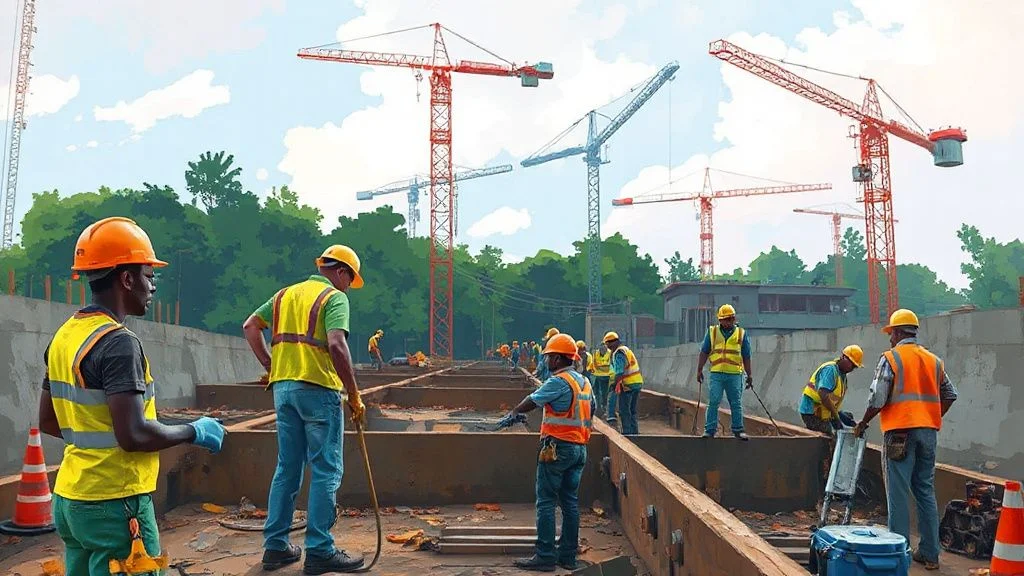
In Suriname, construction roles on public projects are vital for the development of infrastructure and community services. These positions require a blend of technical skills, legal knowledge, and compliance with local regulations. This article outlines what is necessary for individuals seeking employment in construction roles related to public projects, including qualifications, legal requirements, and practical insights.
Understanding Public Construction Projects
Public construction projects in Suriname are typically funded by the government and aim to enhance public infrastructure, such as roads, bridges, schools, and hospitals. These projects are governed by specific legal frameworks that ensure transparency, accountability, and adherence to safety standards. Understanding the nature of these projects is crucial for anyone looking to work in this field.
Construction roles on public projects can vary widely, from laborers and skilled tradespeople to project managers and engineers. Each role has distinct requirements, but all must comply with Suriname's legal standards and regulations governing construction practices.
Legal Requirements for Construction Roles
Licensing and Certification
In Suriname, construction professionals must adhere to local licensing requirements. For instance, contractors must be registered with the Ministry of Public Works and obtain the necessary permits before commencing any public project. This process typically involves submitting documentation that demonstrates compliance with safety and quality standards.
Additionally, specific roles, such as engineers and architects, are required to hold recognized certifications. These certifications ensure that professionals possess the necessary knowledge and skills to meet the technical demands of public construction projects. It is advisable to verify the current requirements with the relevant government authorities, such as the Ministry of Public Works.
Health and Safety Regulations
Health and safety are paramount in the construction industry, especially on public projects. Workers must be familiar with the Occupational Safety and Health Act (OSHA) regulations applicable in Suriname. This includes understanding safety protocols, using personal protective equipment (PPE), and adhering to site safety plans.
Employers are responsible for providing a safe working environment and ensuring that all employees are trained in safety practices. Non-compliance can lead to legal repercussions and jeopardize the project's success. Therefore, aspiring construction workers should prioritize obtaining safety training certifications and familiarize themselves with local safety regulations.
Qualifications and Skills Required
Educational Background
While some construction roles may not require formal education, having a relevant educational background can significantly enhance job prospects. For example, positions such as civil engineers or project managers typically require a degree in civil engineering, construction management, or a related field. Educational institutions in Suriname offer programs that align with these requirements, providing students with the theoretical and practical knowledge necessary for success in the industry.
Vocational training is also valuable, especially for skilled trades such as electricians, plumbers, and carpenters. Many technical schools in Suriname offer programs that equip students with hands-on experience and industry-recognized certifications.
Technical Skills and Experience
In addition to formal education, practical experience is crucial in construction roles. Many employers prefer candidates with hands-on experience in construction settings. Internships or apprenticeships can provide valuable exposure to the industry and enhance a candidate's employability.
Technical skills, such as proficiency in construction software, project management tools, and knowledge of building codes, are also essential. Familiarity with local construction practices and materials can give candidates a competitive edge in the job market.
What to Expect During the Hiring Process
Application and Interview Process
The hiring process for construction roles on public projects typically involves submitting a detailed application, including a resume and cover letter that highlight relevant experience and qualifications. Candidates may also be required to provide references and proof of certifications.
Interviews often focus on assessing both technical abilities and soft skills, such as teamwork, communication, and problem-solving. Candidates should prepare to discuss their previous experiences and demonstrate their understanding of safety regulations and construction practices.
Salary Expectations
Salary levels for construction roles on public projects vary widely with experience, qualifications and the specific role, and this article gives no figures for them. Suriname has no published salary scale per occupation: the Algemeen Bureau voor de Statistiek issues no wage benchmark by job title, no ministry publishes a pay table for private-sector work, and the figures that turn up on international salary sites are modelled from other countries rather than measured here. Job advertisements and people working in the sector will tell you what individual employers are offering, which is worth knowing, but that is not a benchmark and it is not a floor. The one wage figure that is both published and enforceable is the floor: the statutory minimum hourly wage, set by ministerial decision on the advice of the Nationale Loonraad and published in the Advertentieblad.
Practical Tips for Job Seekers
For those looking to secure a construction role on a public project in Suriname, consider the following tips:
- Network: Building relationships with industry professionals can lead to job opportunities. Attend local construction trade shows, workshops, and seminars to connect with potential employers.
- Stay Informed: Keep abreast of changes in construction laws and regulations in Suriname. This knowledge can set you apart from other candidates.
- Enhance Your Skills: Pursue additional training or certifications that can improve your qualifications and make you more attractive to employers.
- Be Flexible: Be open to different roles within the construction field. Gaining diverse experience can enhance your skill set and increase your employability.
Conclusion
Construction roles on public projects in Suriname require a combination of legal knowledge, technical skills, and practical experience. Understanding the licensing requirements, health and safety regulations, and necessary qualifications is essential for success in this field. By preparing adequately and staying informed about industry trends, job seekers can enhance their chances of securing rewarding positions in the construction sector.
Primary Sources
Last updated: November 2026