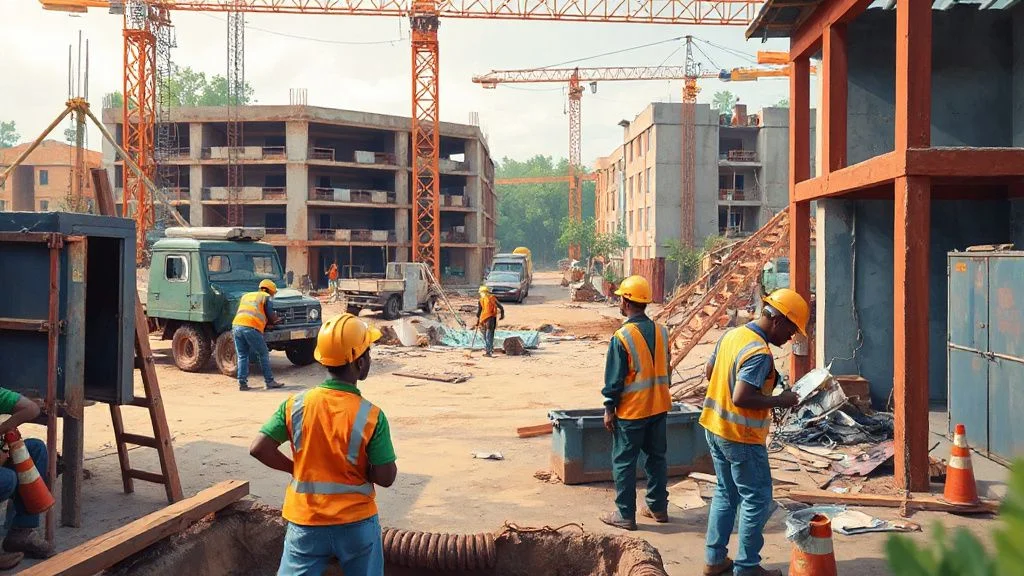
In Suriname, the construction sector plays a vital role in the country's development, particularly in public projects that require a skilled workforce. Understanding who is eligible to work in construction roles on these projects is essential for both employers and job seekers. This article outlines the legal requirements, qualifications, and regulations that govern construction roles on public projects in Suriname.
Legal Framework for Construction Roles
The legal framework governing construction roles in Suriname is primarily based on Dutch civil law, which influences various sectors, including construction. The Minister of Finance and Planning oversees public projects, ensuring compliance with national regulations and standards. Public projects often require adherence to specific laws and regulations, including the Public Procurement Act, which outlines the criteria for selecting contractors and workers.
According to the Public Procurement Act, contractors must demonstrate their capability to fulfill the requirements of the project, which includes having qualified personnel. This means that individuals seeking construction roles must possess relevant qualifications and experience, as stipulated by the project specifications. Furthermore, contractors are responsible for ensuring that their employees meet the necessary legal and professional standards.
Eligibility Criteria for Local Workers
Local workers in Suriname must meet specific eligibility criteria to participate in construction roles on public projects. Typically, these criteria include having the appropriate educational background, relevant work experience, and necessary certifications. For instance, workers may need to have completed vocational training or hold a degree in construction management, civil engineering, or a related field.
Additionally, workers must possess any required licenses or certifications specific to their roles. For example, electricians and plumbers must have valid licenses issued by the relevant authorities. Employers are responsible for verifying that their employees hold the necessary qualifications and licenses before assigning them to public construction projects.
Requirements for Foreign Workers
Foreign workers wishing to take on construction roles in Suriname must navigate additional legal requirements, particularly regarding work permits. The Ministry of Labor, Employment and Youth Affairs is responsible for issuing work permits to foreign nationals. To obtain a work permit, foreign workers must have a job offer from a Surinamese employer and meet specific qualifications that demonstrate their expertise in the construction field.
Furthermore, the employer must prove that they have made reasonable efforts to hire local workers before seeking foreign labor. This is to ensure that the local workforce is prioritized in public projects. Foreign workers must also comply with local labor laws, including regulations related to health and safety standards on construction sites.
Permits and Certifications
In addition to individual qualifications, construction companies and contractors must obtain the permits and certifications they need to work legally on public projects, and a building permit is required before work can start. Obtaining one typically involves submitting detailed project plans and showing that the work meets the national building rules and safety requirements. There is no zoning scheme and no municipal building code to satisfy in Suriname: the country has districts and ressorts, not municipalities, and the permit rules are national, so a requirement that is described as varying by locality is worth questioning.
Contractors must also ensure that they have the appropriate insurance coverage for their projects, including liability insurance and worker's compensation. This protects both the workers and the employer in case of accidents or injuries on the job site. Failure to obtain the necessary permits and insurance can result in legal penalties and project delays.
Common Pitfalls and Mistakes
One common pitfall for both employers and workers in the construction sector is the failure to comply with local regulations. Employers must ensure that they are fully aware of the legal requirements for hiring workers, particularly when it comes to foreign labor. This includes understanding the work permit process and the need to prioritize local candidates.
Workers, on the other hand, should be cautious about working without the necessary permits or qualifications. Engaging in construction roles without the required licenses can lead to legal issues and jeopardize future employment opportunities. It is advisable for both parties to consult with legal professionals or labor experts to navigate the complexities of the construction sector in Suriname.
Practical Tips for Employers and Workers
For employers looking to hire for construction roles on public projects, it is crucial to establish clear job descriptions that outline the qualifications and certifications required for each position. This helps streamline the hiring process and ensures compliance with legal standards.
Workers should invest in obtaining relevant certifications and licenses to enhance their employability in the construction sector. Additionally, networking within the industry can provide valuable insights and opportunities for securing positions on public projects. Staying informed about changes in regulations and requirements is also essential for both employers and workers.
Conclusion
Understanding who may do a construction role on a public project in Suriname involves navigating a complex legal landscape. Both local and foreign workers must meet specific eligibility criteria, including qualifications and permits. Employers play a critical role in ensuring compliance with regulations, while workers must be proactive in obtaining the necessary certifications. By adhering to the legal framework and prioritizing safety and qualifications, Suriname can continue to develop its construction sector effectively.
Primary Sources
Last updated: November 2026